
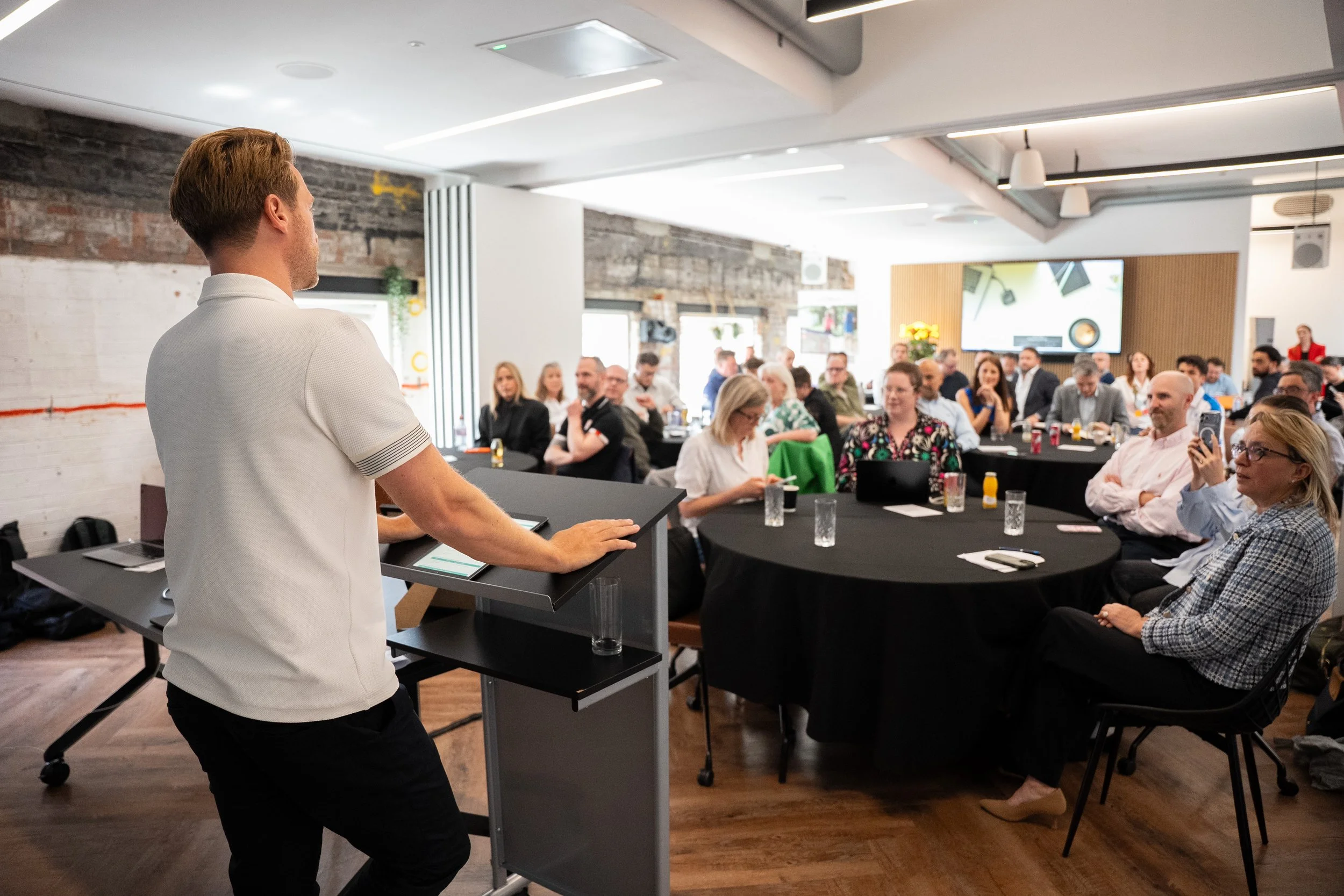
The fourth STA London Summit came and went, and if you were in the room, you already know it was a good one.
Dozens of sports organisations gathered at Red Bull HQ in Covent Garden for a day of honest conversations, practical sessions, and the kind of peer-to-peer energy that you simply can't manufacture. The STA has come a long way from our early events - from a handful of people in an office space to a full house at one of London's most distinctive venues - and this felt like the most complete edition yet.
The theme for the day was ‘Building for What's Next: How Sports Organisations Modernise to Attract, Convert, and Grow’. Every session was designed around where most organisations actually are, not where anyone wishes they were. No glossy case studies, no polished success stories - just senior leaders sharing what's working, what's not, and what they're genuinely trying to figure out.
Sky Sports presenter James Green held the day together as MC with real skill. Keeping the energy up and conversations focused across a full day of working sessions is harder than it looks, and James made it look effortless.
A huge thank you also to Matt Dobson and the team at Red Bull for opening the doors and giving us the most incredible setting to do it in.
Session 1 - What Does Digital Transformation Actually Mean, and How Do We Achieve It?
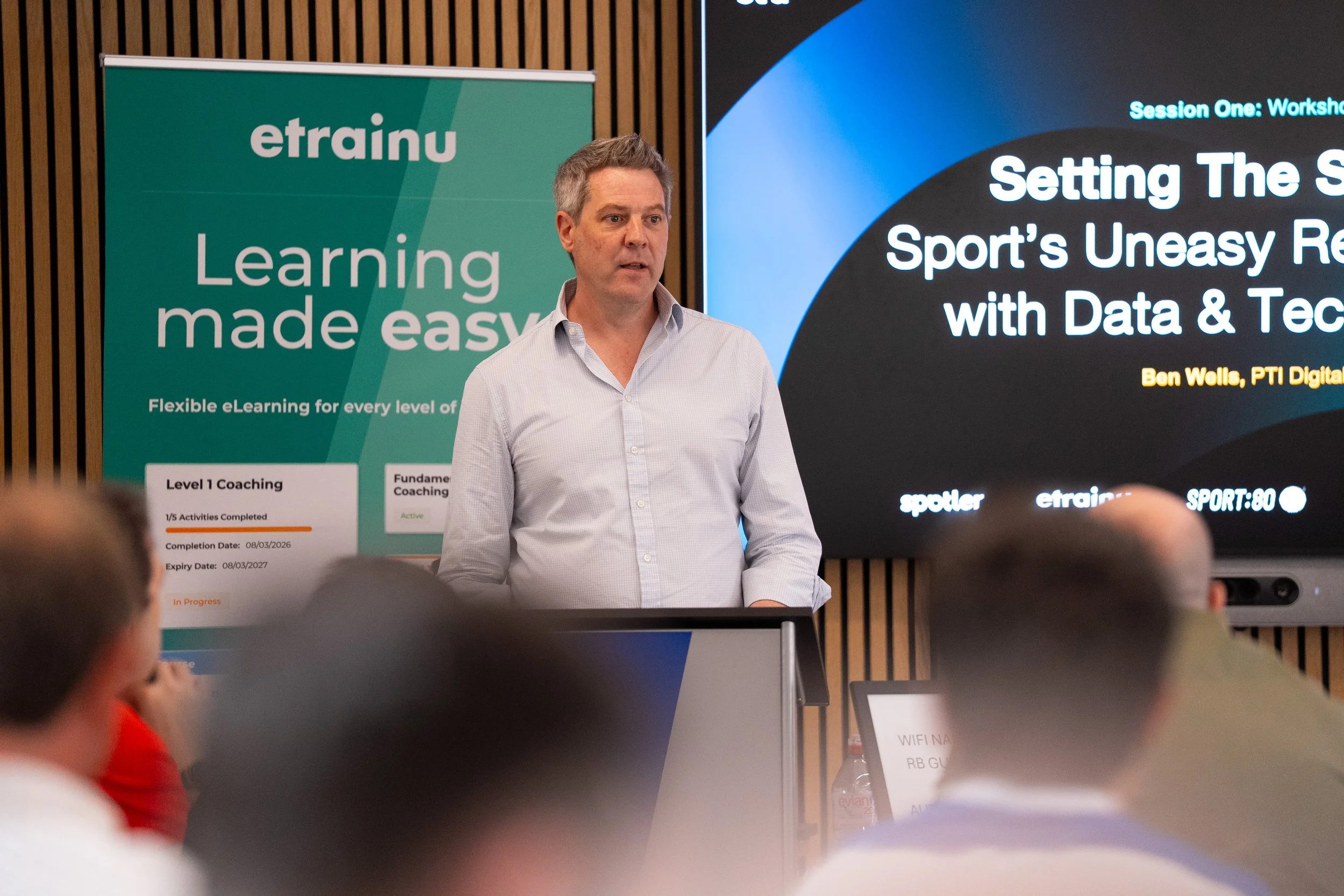
Ben Wells, PTI Digital / Josh Hardy, Swim England / Jonny Turner, Sport:80
Ben Wells opened the day with a challenge to the room: the narrative that UK sport is making good progress on data and technology doesn't hold up to scrutiny. PTI's Sports Leadership Benchmark report tells a very different story - only 13% of UK sports organisations can extract meaningful insights from their data, and 50% are commercialising 10% or less of their customer database. The problem has never been a lack of data collection. It's a lack of strategic intent around what that data is actually for.
Josh Hardy from Swim England then joined Jonny Turner from Sport:80 for a candid case study conversation. Josh was refreshingly honest about where Swim England started: with an outdated digital tech stack and a challenging member experience. The turning point came from listening - a new CEO commissioning roadshows that confirmed what everyone already suspected, followed by an external audit that gave the board the courage to act. Jonny added the partner perspective: the organisations that successfully modernise all share one quality - they step back, look at the strategy first, and then commit to it without flinching.
Key takeaways from the room:
Digital transformation is a people and culture challenge first. Technology is the enabler, not the answer.
Value exchange is the missing frame for most organisations: too much focus on what members owe, not enough on what they're being offered in return
British Fencing’s CEO, Georgina Usher, made a point that resonated across the room - drop the phrase "digital transformation" entirely; framing change around specific outcomes keeps people on board far more effectively.
Without the CEO and board actively aligned and giving permission, these projects stall at the first sign of pressure. Every table arrived at this conclusion independently.
Three questions to take back: What does this actually mean for our organisation specifically? Who owns it with enough seniority to make it move? What's one step we could take in the next 30 days without a large budget or board sign-off?
Session 2 - AI in Sport: Cutting Through the Noise
Jack Clay, Spotler / Erol Aydin, Hudl / Courtney Stuhmcke, etrainu
Courtney Stuhmcke opened with a quick pulse check that immediately set the tone. At a similar STA event last year, over half the room hadn't used AI at all. This year, virtually everyone had. The session moved on from explaining what AI is and got straight into how to use it with intention, and what gets in the way of doing that well.
Erol Aydin from Hudl brought the perspective of someone who has led AI adoption inside a large organisation working across thousands of sports teams globally. His central point: AI adoption is a change management decision, not a technology decision. Jack Clay from Spotler then took a more practical lens - walking through what the main tools actually do well, where they fall short, and how to get genuinely useful outputs rather than generic ones. One of the day's most honest exchanges followed, with a delegate raising safeguarding as the genuine board-level priority for smaller NGBs, and the room working through it together constructively.
Key takeaways from the room:
"Shadow AI" is already happening in most organisations - well-meaning staff using unapproved tools to work faster. The question has shifted from whether your people are using AI to how you manage what's already happening.
Three things every organisation needs before scaling AI: a clear culture position from leadership, an internal champion with real seniority, and a short governance document that people will actually read.
Vague prompts produce generic outputs - the quality of what you get out is determined entirely by the context and detail you put in.
Build custom GPTs or Claude Projects with your brand voice and audience pre-loaded, so you're not re-explaining yourself every session.
Never treat the first output as a deliverable - it's always a draft.
Session 3 - The Education Stack: How Sport Organisations Deliver Learning in a Digital-First World
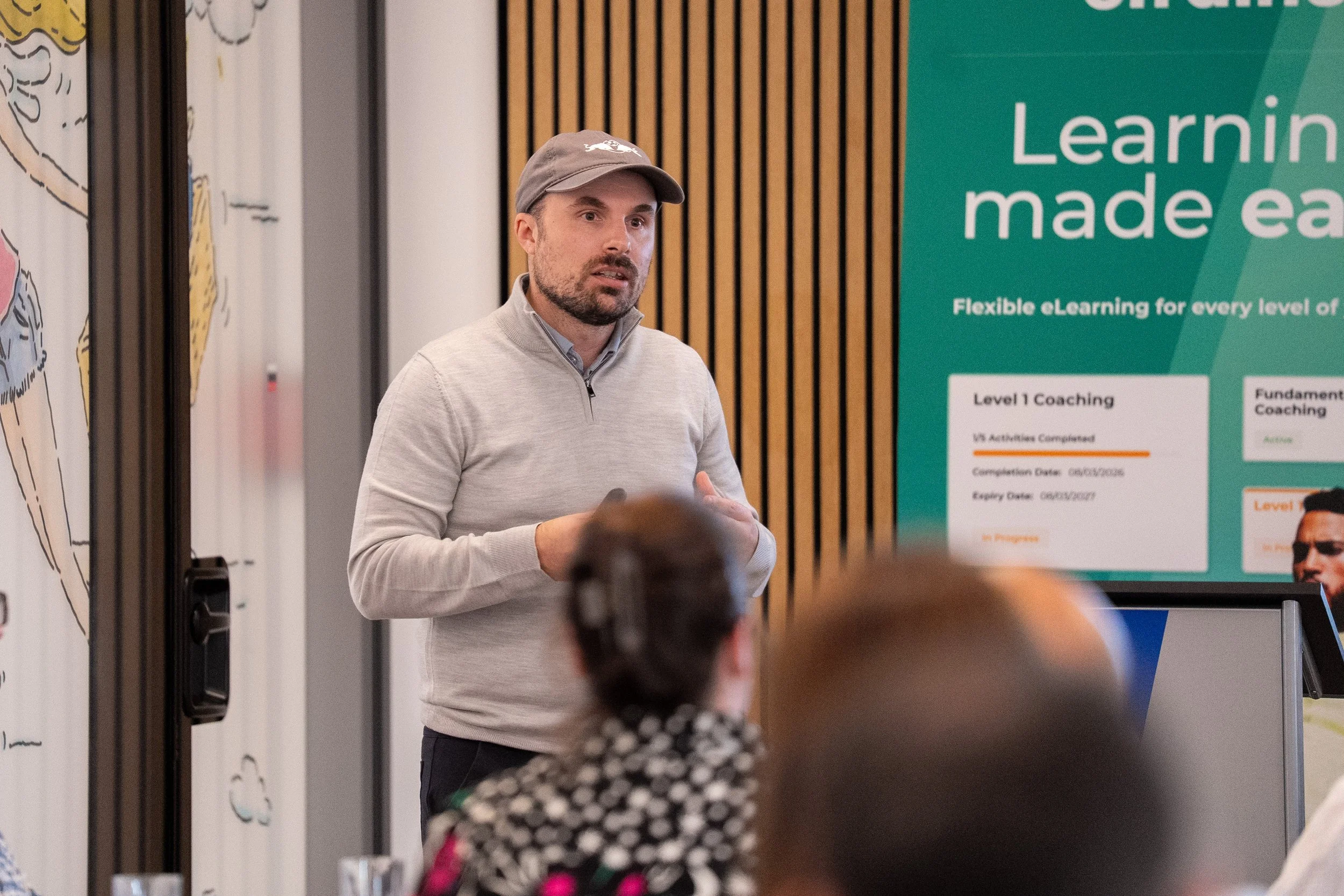
Jack Bradshaw, Red Bull New York
Jack Bradshaw offered a peer-level view from inside Red Bull New York - an organisation managing 40 youth partner clubs, 400 teams, 50,000 participants, and 175 coaches across a pay-to-play coaching model in one of the world's most competitive leisure markets. He was clear from the outset: RBNY will always be a people-first organisation. Technology exists to make human processes more efficient, not to replace them. That grounding shaped the whole session.
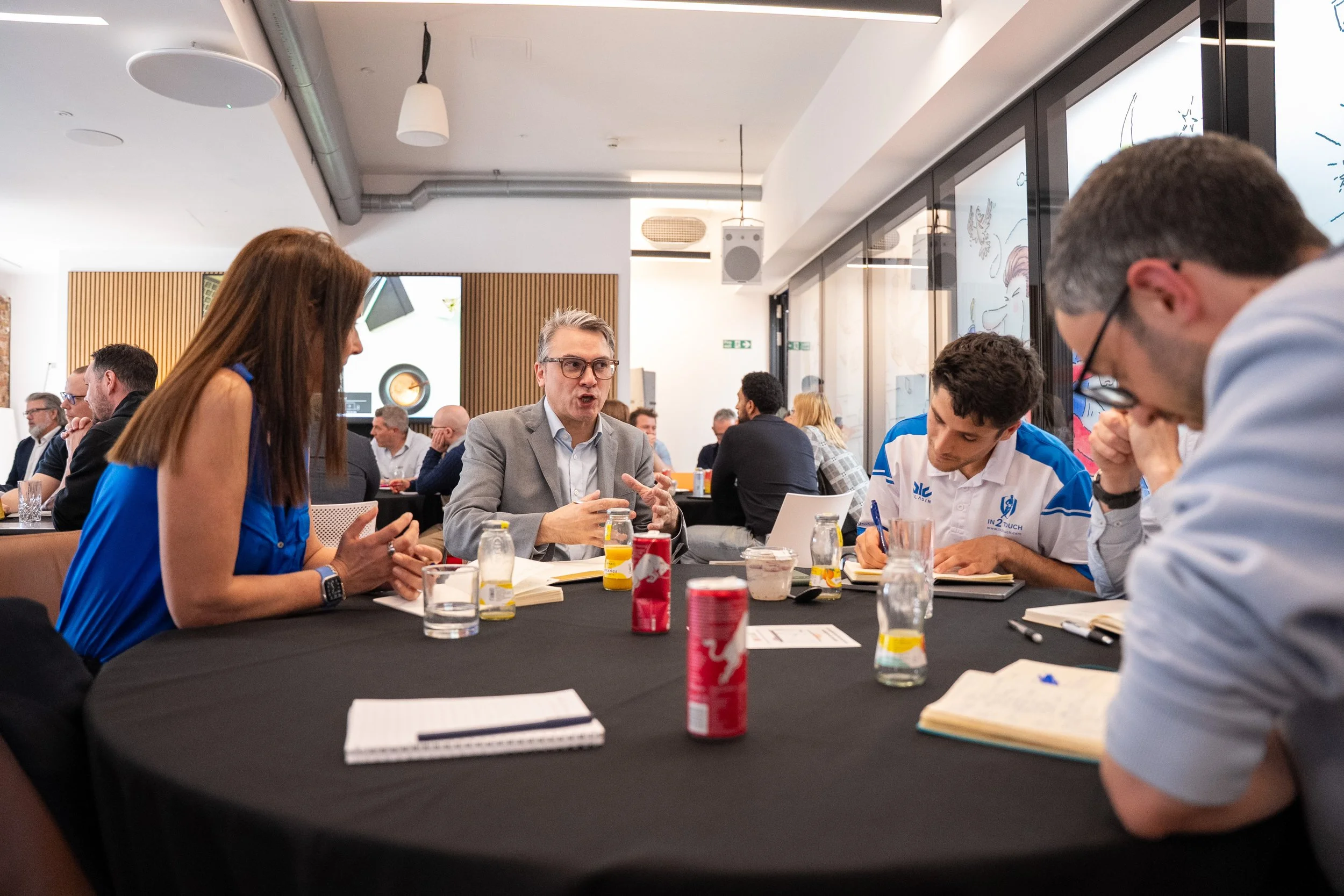
The table discussions that followed surfaced challenges that will feel familiar to most governing bodies - the friction of basic platform access for older volunteers, the difficulty of centralising education pathways without stripping out the local feel that makes people want to be involved, and the tension between asynchronous digital delivery (reach without depth) and human-led sessions (depth without scale). The aspiration across multiple tables was a genuinely blended journey - one where the human element isn't lost, just delivered differently.
Key takeaways from the room:
Getting people to log in remains the single biggest barrier. The content can be excellent, but if coaches can't get past the login screen, none of it lands.
Most organisations are passively waiting for people to declare an interest in coaching; data segmentation to proactively identify likely converters is something technology can do well, and almost nobody is doing it yet.
The next generation of learners don't sit through two-hour workshops - three-minute, focused, specific content is what lands, and most current programmes are still built around formats designed for a previous era.
Education should function as a retention and growth strategy, not a compliance requirement. Completing a course should be the beginning of the journey, not the end of it.
Session 4 - A New Era: What Does Building for the Future Actually Look Like?
Grant Wechsel, Co-Chair, London Broncos
This keynote fireside chat was one of the day's standout moments. Grant Wechsel, Co-Chair of the London Broncos, gave an unscripted, candid account of what rebuilding a sports organisation from near-zero actually looks like. The club arrived in his hands with no back-office staff, almost no funding, and very little infrastructure. Within three months, the new leadership had rebranded, recruited 21 players, appointed a new coach, and rebuilt the back office from scratch - all while applying for Super League promotion before they even formally owned the club.
Grant was direct throughout: "new era" means sustained success, not just a relaunch. On the toughest decisions, he was equally open - the women's team and pathways work were put on hold in the first three months, but rather than communicating that badly, Grant went in person to meet the groups affected. Standing in front of them, explaining the vision, and taking questions directly. His view: fronting up gives people a chance to feel you care, rather than feeling managed.
Key takeaways from the room:
Prioritisation is everything in a rebuild. The first team getting on the field and winning had to come before anything else, and being honest about that matters as much as the decision itself.
Awareness is the London Broncos' biggest challenge: Rugby League is a northern sport in a southern city, competing against everything London offers. Building a sustainable membership base from near-zero takes time and realism.
Social media is a formal RFL grading metric used to assess promotion eligibility - making it structurally important in a way that goes well beyond content strategy.
Grant's advice for anyone on a similar journey: "Expect it to cost more than your budget. Then get the right people on the bus - they have to want to be part of what you're building."
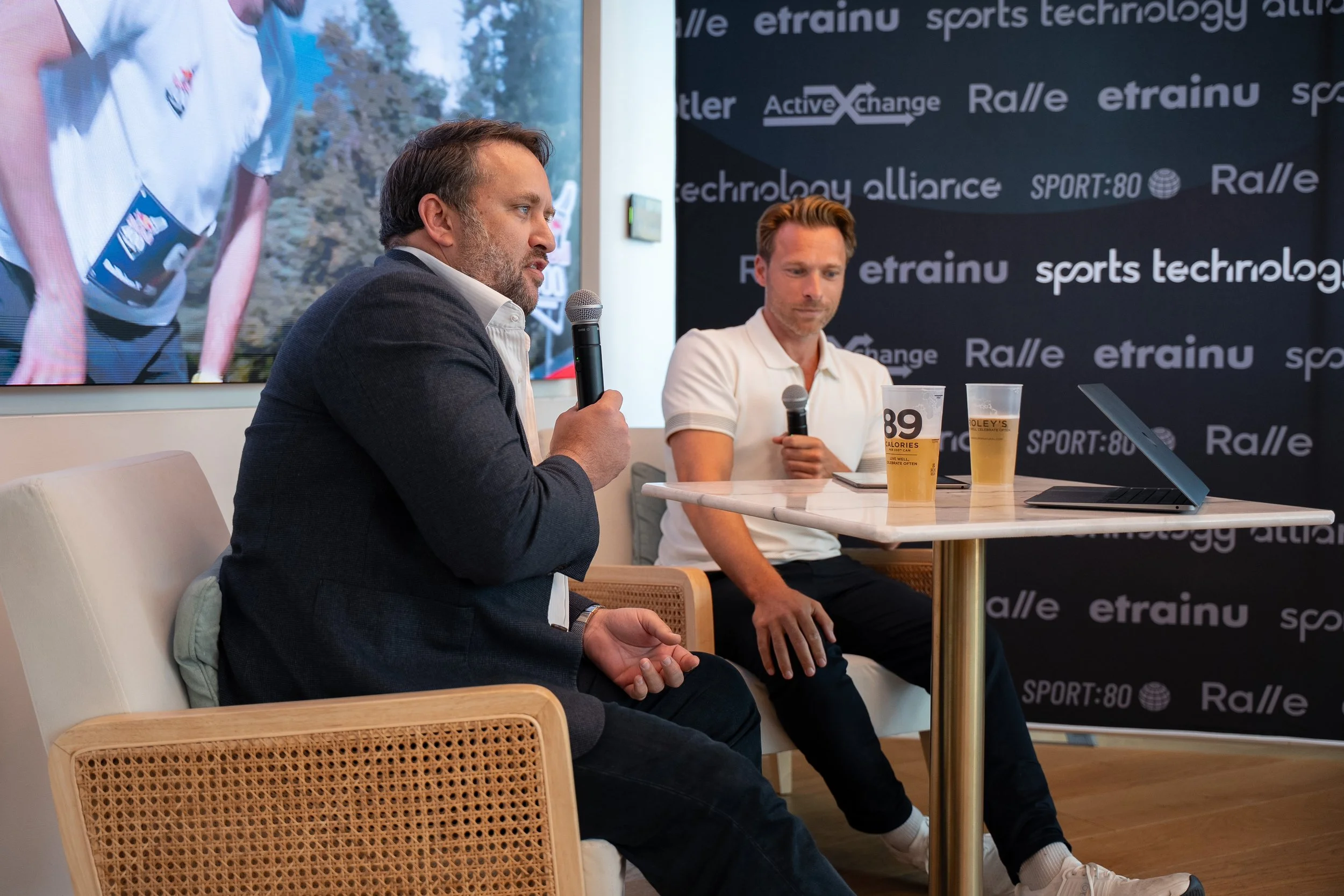
Events like this only work because of the people who show up ready to be honest.
Dozens of organisations in the room, senior leaders sharing what's broken as freely as what's working, and a genuine collective willingness to help each other move forward. That's not something you can manufacture.
A huge thank you to our speakers - Ben Wells, Josh Hardy, Jack Clay, Erol Aydin, Jack Bradshaw, and Grant Wechsel - for contributing so generously and so openly on the day, to James Green for keeping the energy up and the conversations focused, and to everyone who attended - you made the day what it was.
What's Next?
We're already looking ahead. Details of the next STA Summit will be announced soon, and alongside our in-person events, we're excited to share that the STA's first-ever virtual sessions and official webinars are on the way.
More ways to stay connected, keep the conversations going, and bring the STA community together.
Watch this space!
To find out more or get involved, get in touch at info@sportstechnologyalliance.com.