
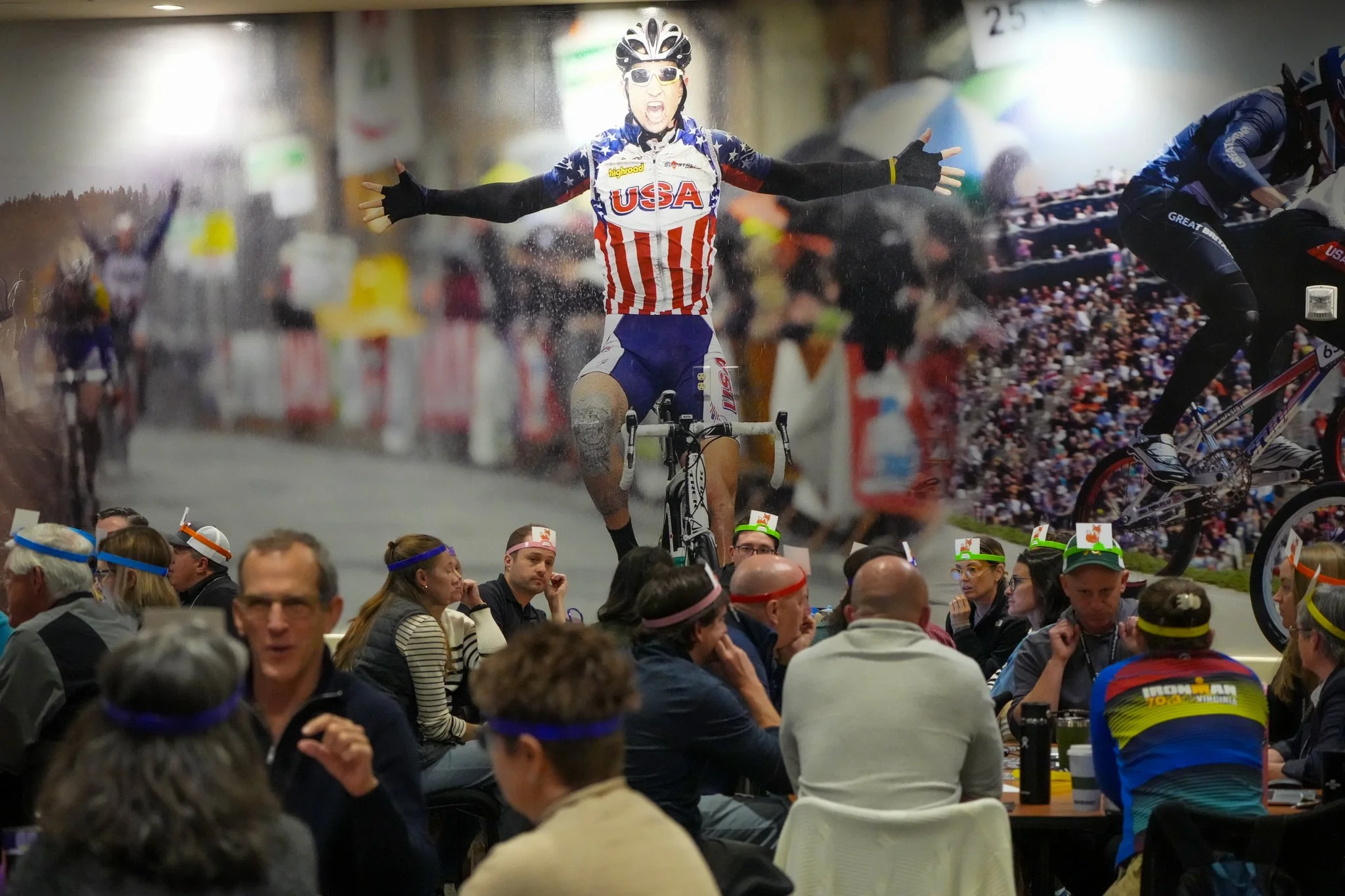
Over 30 sports, 50-plus senior leaders and two days at USA Cycling HQ in Colorado Springs. The fourth annual STA USA Summit ran on 17 and 18 November 2026, and every session ended with something people could take back to their desks on Monday.
Day One: The Problem Wall
Our MC, Jason Frazier (etrainu) opened the USA' ‘26 Summit by sending every table into one question: what is the biggest thing you are struggling with right now? Each table nominated a speaker and the answers went on the wall.
The same few themes came up again and again:
Membership growth and retention. Bringing in new members when the membership itself is changing, and giving people a reason to renew.
Communicating value. Explaining what a background check is, what a membership delivers, and doing it in a way that lands with every generation.
Safety. Safeguarding across members, partners and stakeholders.
Bandwidth. One-person teams running national regionals on a Saturday.
Data. Plenty of it, with no clear route to action.
Insurance. Facility cover for sports like parkour, and what happens when a broker pulls out of a state.
Every one of these came back over the two days.
Creating a Culture of Compliance
Jason asked who had a line item in this year's budget for safeguarding. Few hands went up. The goal for the hour: every hand up for 2027.
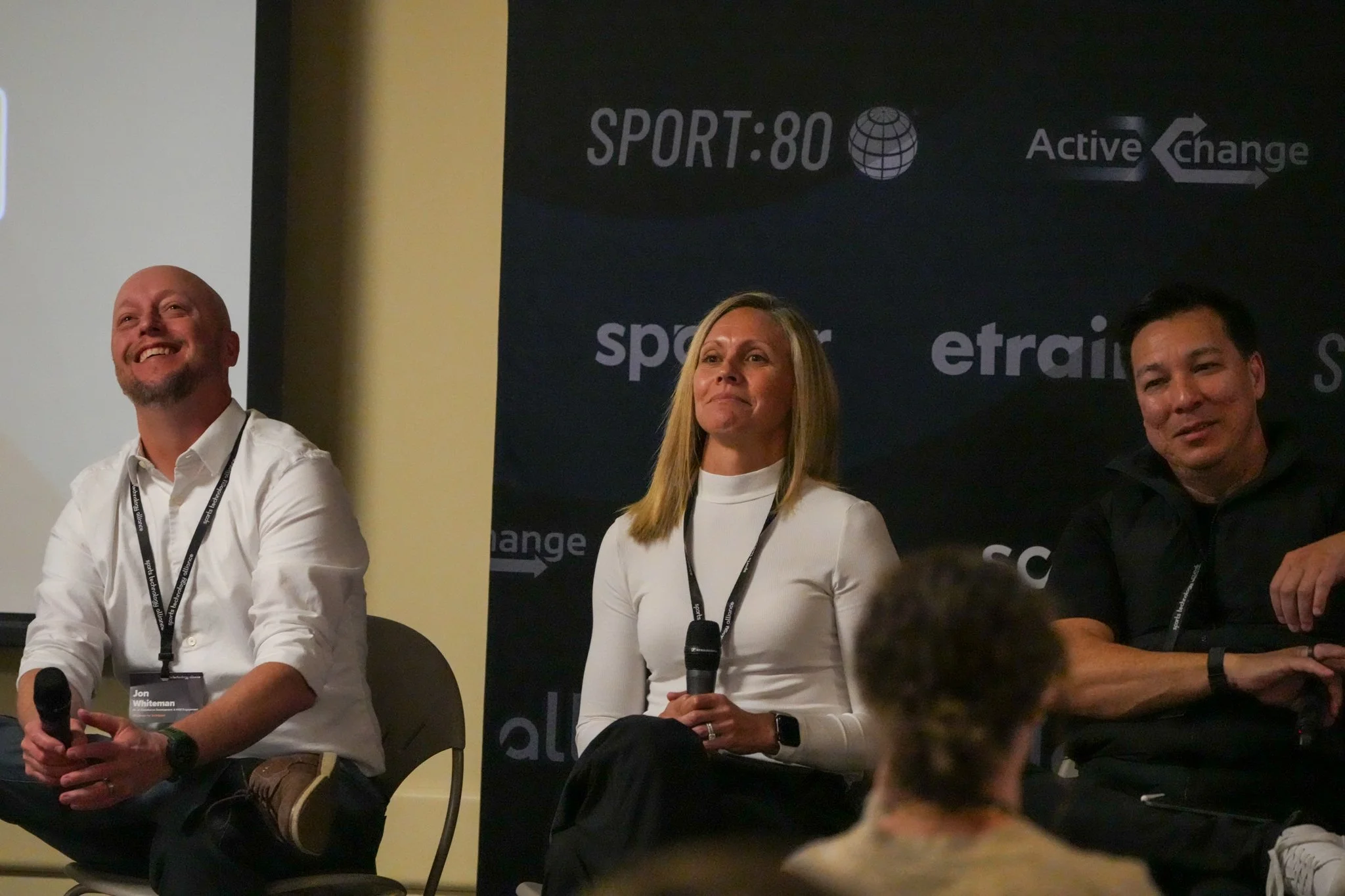
Jason moderated a panel of Jon Whiteman (U.S. Center for SafeSport), Kyle Lubrano Satola (Players Health) and Paul Hoon (etrainu).
Time and communication make change stick. Jon rolled out the national Safe Sport changes at USA Cycling with eight to nine months to plan, early messaging and listening sessions for staff. Members who were frustrated at first came back once they understood the why.
Insurance has hardened. Kyle explained that carriers offering sexual misconduct cover shrank from around 30 to a handful, and limits fell sharply. Documented policies, checks and training now affect price and access.
Check the database. The Center's disciplinary database is public. Jon's ask to every organisation: check it regularly, tell your members it exists, and when in doubt, report.
Background checks. Run them at least annually, down to county level, with your disqualifying factors written out before a result arrives.
Training works best inside the workflow. Paul's 90-day sequence: own the academy, set the reporting structure, pick one source of truth, link training to moments like state titles, then monitor on a set cadence.
Budget for it. Jon: organisations prioritise what they resource. Build safeguarding into the strategic plan, name it as a value and fund a person.
The table work surfaced a sharp problem from USA Water Polo: coaches are on the pool deck before they renew, and the system only catches them at roster time. Their answer was an athlete safety officer at every club.
Coach Development
Cameron O'Riordan of etrainu hosted this session on the new U.S. Coach Development Framework, built over four months by a working group of NGBs, youth organisations and partners. Vincent Minjares, Ph.D from the Aspen Institute Sport & Society Program, who led the framework project, walked through it. Alicia Pelton from Coaching HER showed what it looks like in practice for girls' sport.
A broader definition of coach. Personal trainers, camp counsellors and youth development staff count too.
Context decides strategy. Novice, recreational, competitive and elite athletes need different coaches. Vince's warning: a lot of coach strategy is still one-size-fits-all.
Awareness comes before activation. Alicia's rule from Coaching Her: it takes about a year of small, visible touch points before a new course gets used. A course posted on a website does not bring people in by itself.
Training as a benefit. Several tables reframed education from a requirement into something coaches get. Time was the biggest barrier, since nobody has spare hours.
Help the next survey. Aspen and Ohio State's coach survey sits at 5,300 responses with a 20,000 target, and it is open until April.
The Road to LA28
Jonny Turner of Sport:80 opened with a question for the room: it is the week after the Closing Ceremony, enquiries are through the roof and millions have watched your sport on TV. What have you done to make the most of it?
His case study was London 2012, where participation barely moved and few governing bodies converted the moment. Two sports did it differently: England Boxing invested in club infrastructure, and British Cycling built a route into the sport years before the Games.
Then a panel of three: Simon Hoskins (USA Field Hockey), Gina Lux (U.S. Olympic & Paralympic Committee) and Darren Jacoby (USA Triathlon).
Plan early, and own it. USA Field Hockey started its LA plan in 2016, and it now has a 50-page document split between engaging people already in the sport and bringing new people in through Try Field Hockey.
Fans and members barely overlap. Gina's proof-of-concept work with NGBs found under 3% overlap, which makes joining up the data urgent.
Start from the people you serve. Darren's team ran a value proposition exercise with race directors, coaches and clubs. Coach content output rose fivefold once coaches were invited to build it.
Non-members are the opportunity. LA28 will put millions of new people in front of the sport. Building a relationship with someone who has never joined needs a different starting point.
The Surge Test closed the session. Tables had 20 minutes to plan for the week after the Games. One idea carried into the next session: a national ‘Try USA Day’, with clubs across taekwondo, artistic swimming, field hockey and badminton opening their doors on the same date, 17 July 2027, a year out from the Games.
Membership Marketing
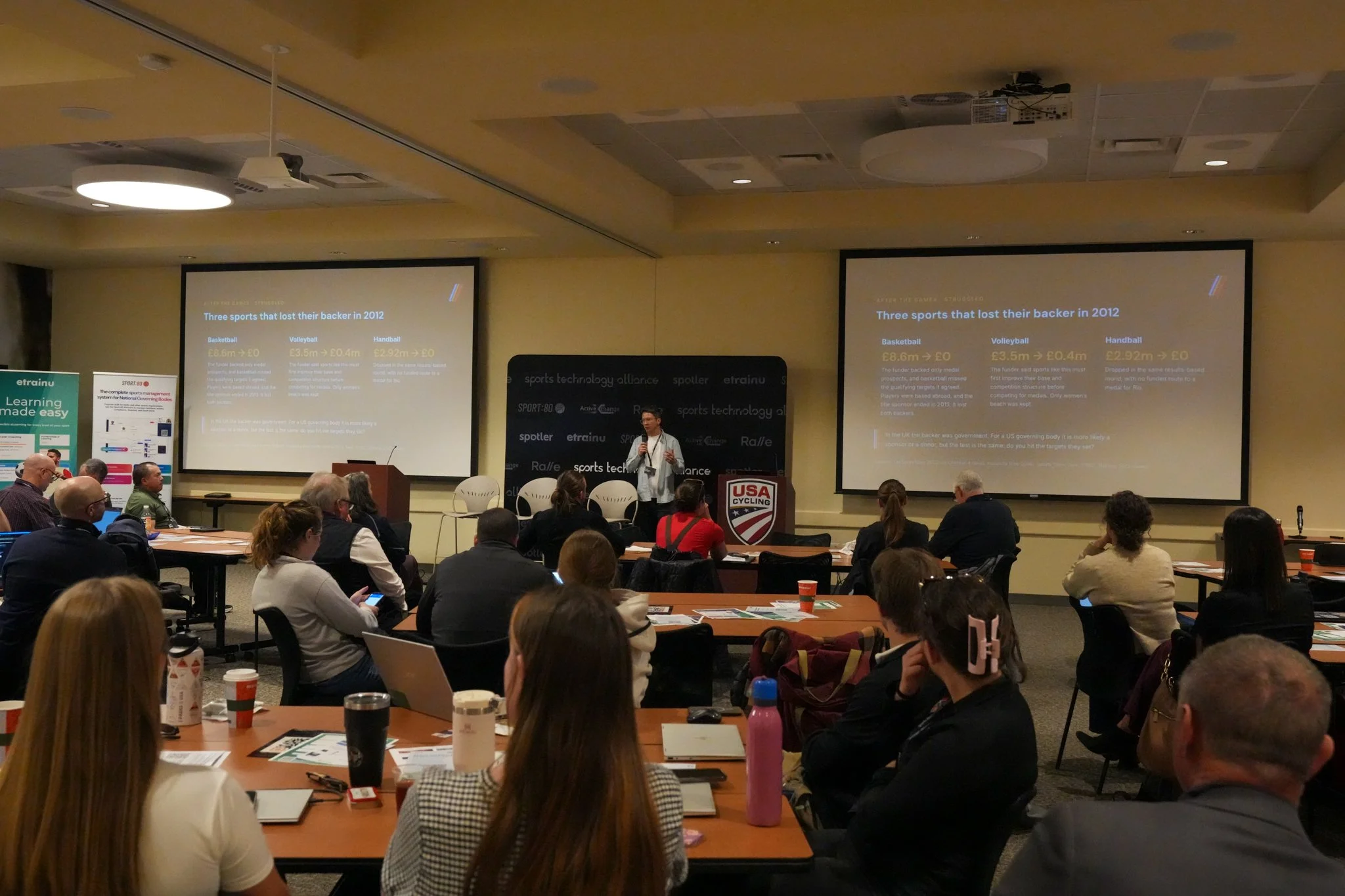
Jack Clay of Spotler asked the room to think of members as customers: they pay you, and they expect a relationship that delivers. He had spotted a pattern across the day. Lots of communication, much of it ad hoc, little of it built as a journey.
He walked through the four journeys every NGB needs.
Prospect to member. Capture contact details at every event, message people while they are still in the room, explain what membership gives them and link straight to sign-up.
Onboarding. Confirm on day zero, say what happens next, then follow with a 30-day plan.
Participation. Single purchase syndrome affects every retailer. Two data points, the date of an event and the number of times someone has taken part, are enough to build a prepare, celebrate and return loop.
Renewal and lapsed. Auto-renewal beats letting memberships time out. Text messages cut through when something matters.
Tables then built journeys for their own sports, from a boxing campaign that turns a televised fight into free first sessions at local clubs, to a taekwondo post-event thank-you with merchandise links. Jack's measures: conversion within 60 days of a taster, the onboarding action, participation and renewal.
Day Two: Getting More From What You Have
Day One named the problems. Day Two explored the tools. The morning opened with a recap round, and the room shared what had stuck: a table that went home to plan how to capture data at a Try USA Day, a soccer organisation lining up its World Cup learnings for LA28, two organisations swapping notes on codes of conduct.
Then three sessions on what every NGB already holds. The data sitting in its systems. AI for the work that eats the week. The people, across five generations, who do that work. Each one asked the same question: how do you get more from what you have?
Turning Data into Product
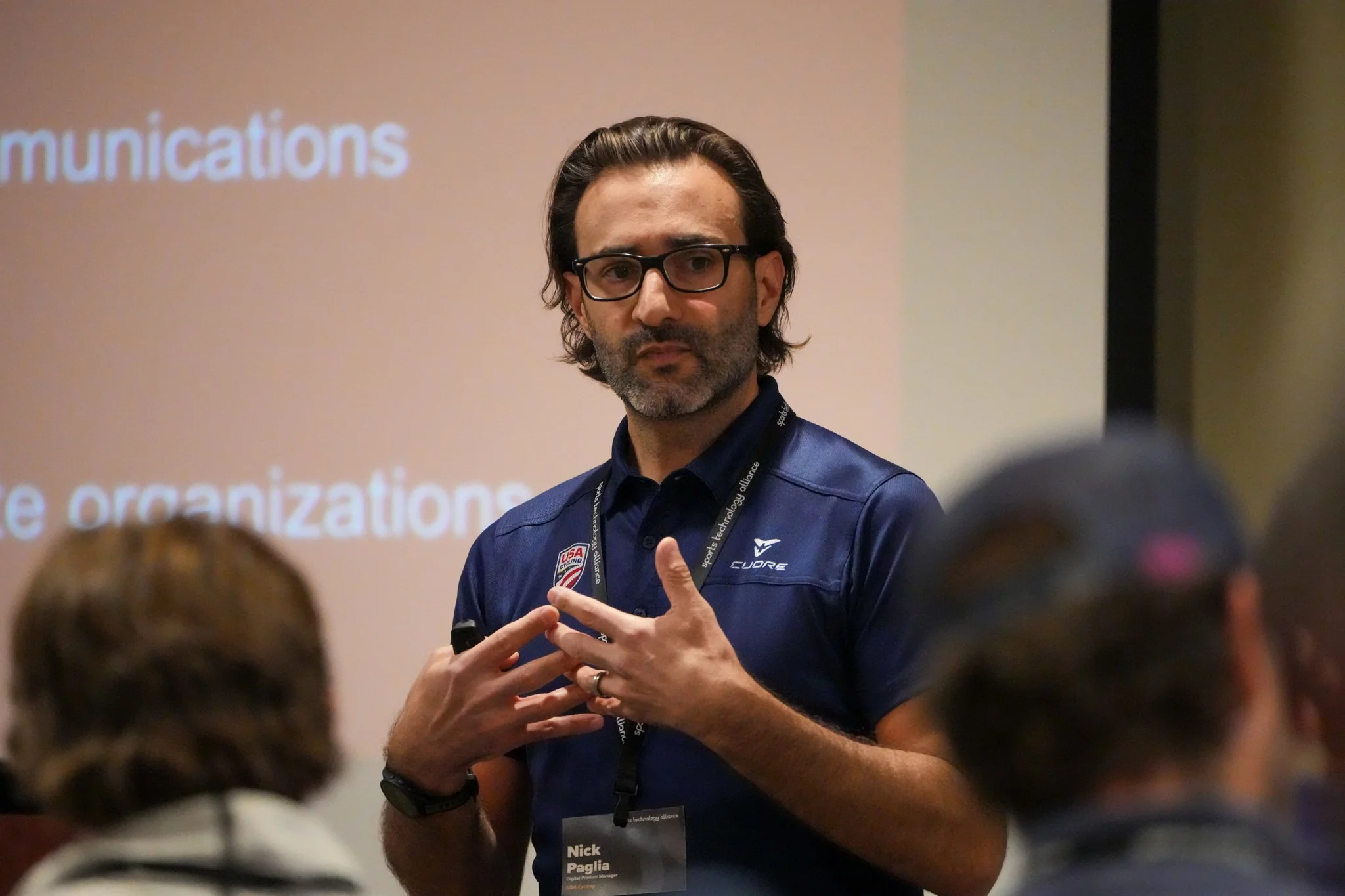
Nick Paglia from USA Cycling had sat at the back of this room a year earlier, on the day USA Cycling went live on Sport:80. This time he took the stage with what that year produced.
He started with a driver's licence. On its own it is a name, an ID number and a licence class. Add the vehicles, the trips and the insurance record and the picture fills in, but each piece sits in a different system. Every data set needs to pass three tests: is it available, accessible and accurate?
Results are the product. Memberships are what an NGB sells. Results and rankings are what it creates. No AI system can produce authentic results, and members generate them every weekend.
Rider days show where participation moves. The overall line shows a problem and each layer underneath shows where.
A race within the race. The system shows each rider who they beat and who beats them, which gives riders at 10th place a reason to come back.
Automatic upgrades. Category upgrades used to run on spreadsheets and emails. The system now calculates points and approves requests automatically, saving thousands of hours.
Ben Jones from ActiveXchange then showed what happens when member data meets other data sets: drive-time matrices, population projections, commercial segmentation and GPS geofencing of events. His worked examples covered where to support clubs, Try USA Day as a joint campaign, and where to hold championships. His rule for all of it: lead with a decision, and keep the output simple enough to tell as a story.
Navigating the AI Jungle
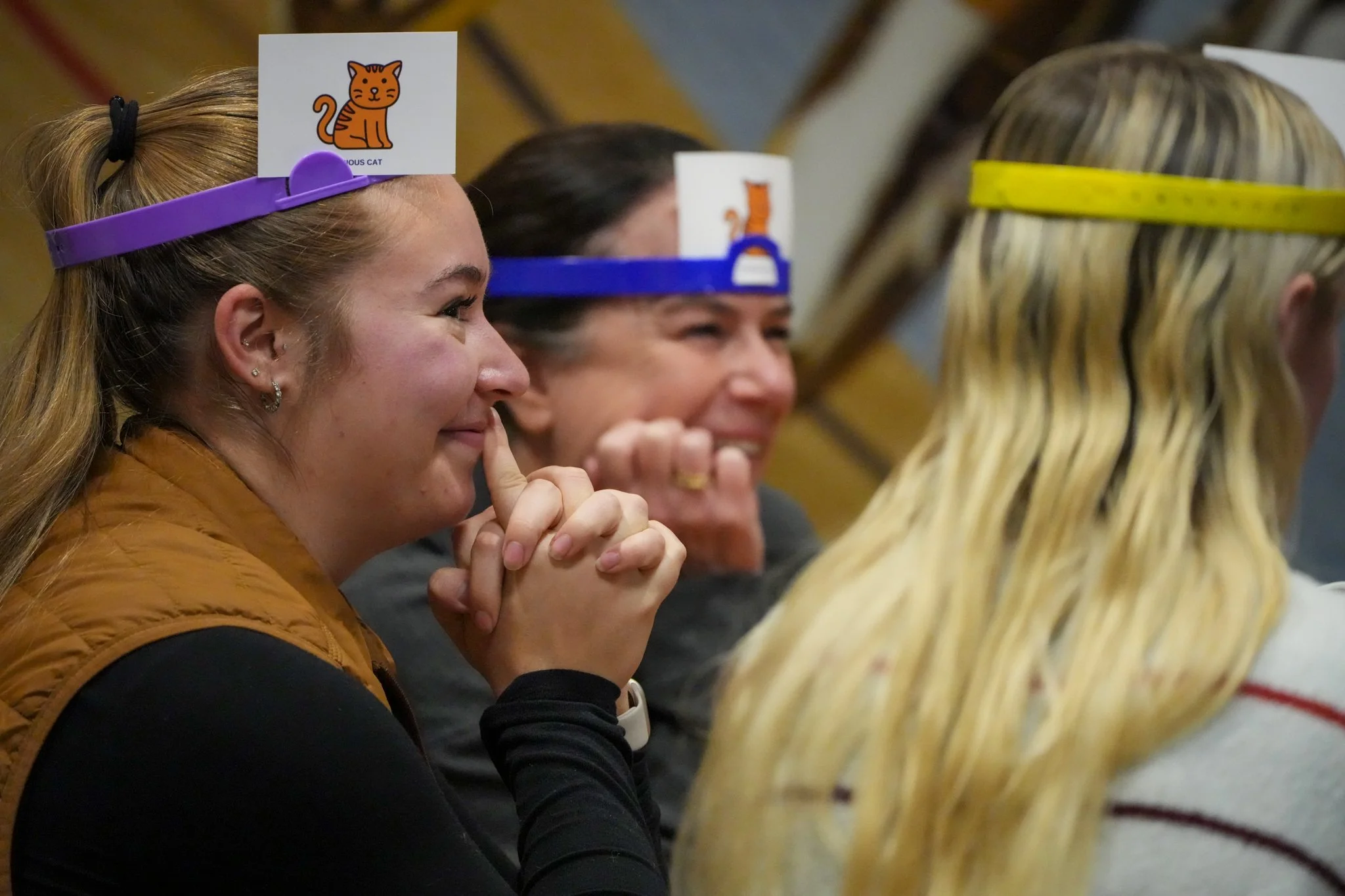
The AI session came with headbands. Curious cat, clever fox, sharp-eyed eagle or mastermind octopus: everyone picked the animal that matched how they use AI today, then sat with their own kind.
The room's registration answers set the scene. 95% already use AI and 59% use it every week. By animal, 41% were curious cats, 32% clever foxes and 27% eagles. Nobody registered as an octopus, though one stood up to claim the title later in the session.
Each animal named what the next one does. Foxes want a senior strategist who can set direction and validate outputs. Eagles want to connect data across systems. Cats want proof of accuracy before they trust it.
A real octopus shared the playbook. USA Ski & Snowboard wrote an AI policy into the handbook, staged the rollout across three tools and trained more than 100 staff. His advice: start now, since the cheap window is closing.
A TED talk made the case for tools that make you think. Studies on AI-assisted work show narrower ideas, less critical thinking and weaker memory. The alternative: tools that challenge your thinking in place of obeying it.
Jack's rule for a first project. Pick something you already know well, like your FAQs, so you can test every answer yourself.
The Generational Workshop
Katherine Jeffrey, Ph.D, closed the event with a workshop on a first in history: five generations in one workforce. Her opening reframe: treat each generation as a separate culture. When you plan a trip abroad, you research the language, the customs and the etiquette. Bring that curiosity to the colleague two decades younger.
Small signals carry big meaning. A full stop at the end of a text reads as harsh to younger colleagues. An ellipsis creates anxiety. A thumbs-up can read as sarcasm.
Email splits generations. Gen X writes bullets and gets read as bossy. Millennials read the first and last sentence and expect chat tools for back-and-forth. A one-line "got it, back to you Monday" closes the loop for the person waiting.
Gen Z wants a growth plan from day one. They also want feedback in real time and kind in tone. Catherine's line from a former pro basketball coach: "I'm not calling you out, I'm calling you up."
Perception beats intent. The same word, "ethical", meant tone of voice to one generation and lawbreaking to another.
Tables sorted by generation and answered six prompts, from how to find a new sport to the song that defines them. Boomers wanted a clear email and a phone call. Gen Z wanted a text, no more than three steps to sign up, and a free first session.
Wrapping up
A summit like this depends on people giving up days in their calendars and putting their problems on the table. Thank you to everyone who did both.
Jason Frazier and etrainu, for MC'ing both days with energy and warmth, and keeping every room talking.
USA Cycling, for hosting us at their headquarters in Colorado Springs, and their team for looking after every detail.
Mary Emmons at USA Archery, for supporting the organisation of the event from the first conversation.
NCSI, JDP and Capelli Sport, for sponsoring the Summit, from the networking evenings to the footballs that went home in delegates' bags. Sponsor support is what keeps the summit free to attend.
Every delegate, for the questions, the table work and the new connections across more than 30 sports.